

Background
Under U.S. visa law, a medical examination is mandatory for all immigrant visa applicants, regardless of age. Medical eligibility is a requirement of the Immigration and Nationality Act (INA)—specifically, Sections 212(a) and 221(d). To quote the INA itself:
Prior to the issuance of an immigrant visa to any alien, the consular officer shall require such alien to submit to a physical and mental examination in accordance with such regulations as may be prescribed.
The medical exam has been part of the immigration process since the late nineteenth century, when the U.S. began using it to restrict the entry of persons with a “loathsome or dangerous contagious” disease or mental deficiency.
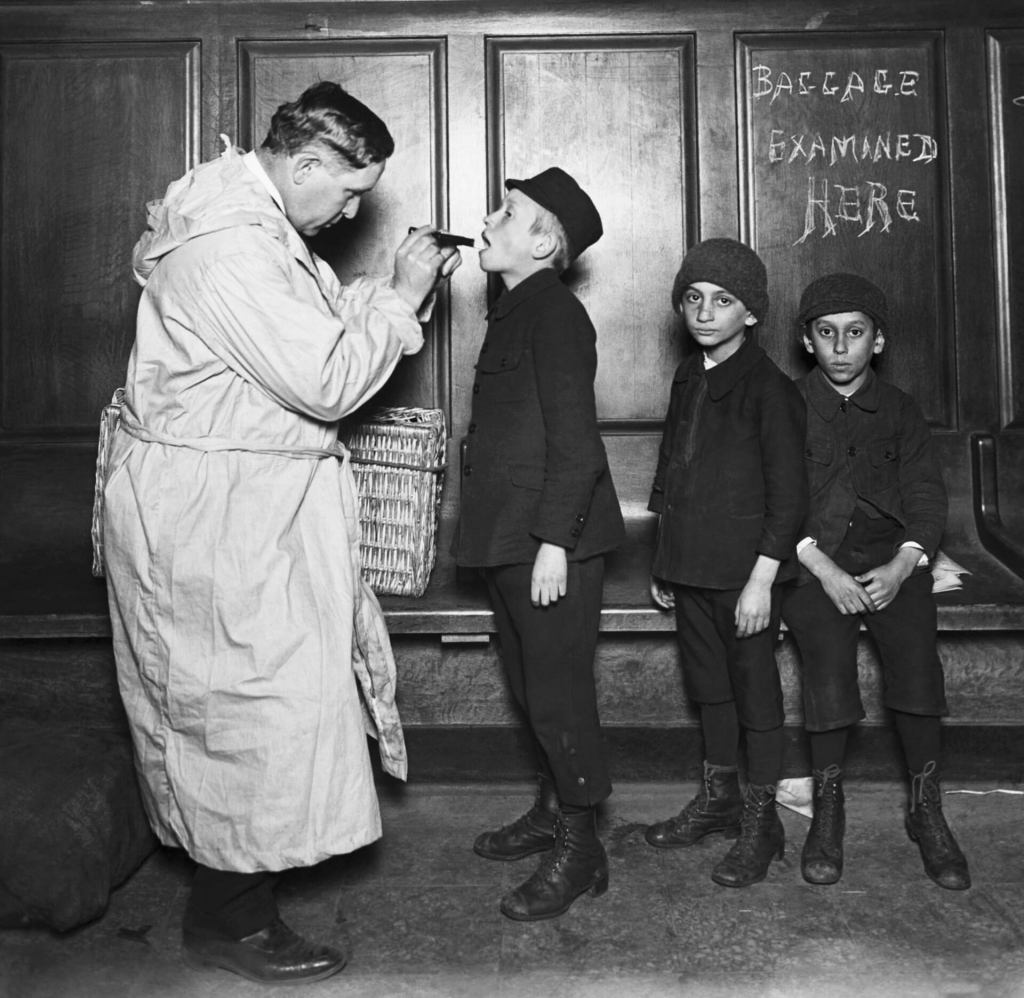
As you might imagine, the exam has evolved quite a bit since immigrants travelled through Ellis Island, but it can feel a little intimidating if you don’t know what to expect. So here’s my entirely personal account of what it was like to experience the U.S. visa medical exam in 2025.
It’s important to note that this post is from the perspective of a 36-year-old man with no children, immigrating to the U.S. in the CR-1 (spouse of a U.S. citizen) category.
Not everything I write here will apply to you: there are slightly different rules for K-1 visa applicants, for example, who don’t have to meet the vaccination requirements at the time of the visa interview.
Also, if you’re of a different age, or if you have (or are having) kids, or you have certain health conditions, the whole experience will be slightly different and the requirements will be slightly different.
1. Scheduling the U.S. Visa Medical Exam
Once you have a date for your visa appointment, you can call U.S. Visa Medicals (0207 486 7822) to book in your medical exam, quoting your case number.
You should generally make sure you make your medical exam takes place at least 10 business days before your Embassy interview, so that they have time to process the results and forward them to the Embassy.
After you’ve scheduled your medical exam, you’ll get an email with some important information about what you’ll need to bring and what to expect on the day. Read that email very carefully: whatever that email tells you to bring should override anything in this post. If you’re confused, call the U.S. Visa Medicals number for clarification.
2. Preparing for the U.S. Visa Medical Exam
With the medical exam booked in, I then received a (poorly formatted) email that told me to bring the following to my U.S. visa medical:
- Original Passport – must be valid/in date. We do NOT accept copies of ID only certified copies of passports are valid. We will not be able to conduct the medical if copies are not OFFICIALLY certified.
- YOUR CASE is online, we will take a digital photograph of you on the day.
- ACRO Police certificate (or a copy) dated within the last 24 months for anyone 16 years of age & over (if your ACRO police certificate is more than one page long YOU MUST advise Visa Medicals Ltd ahead of your medical as you may need additional time with the Doctor. If you fail to tell us ahead of the time you may be asked to come back to go over this at an additional fee).
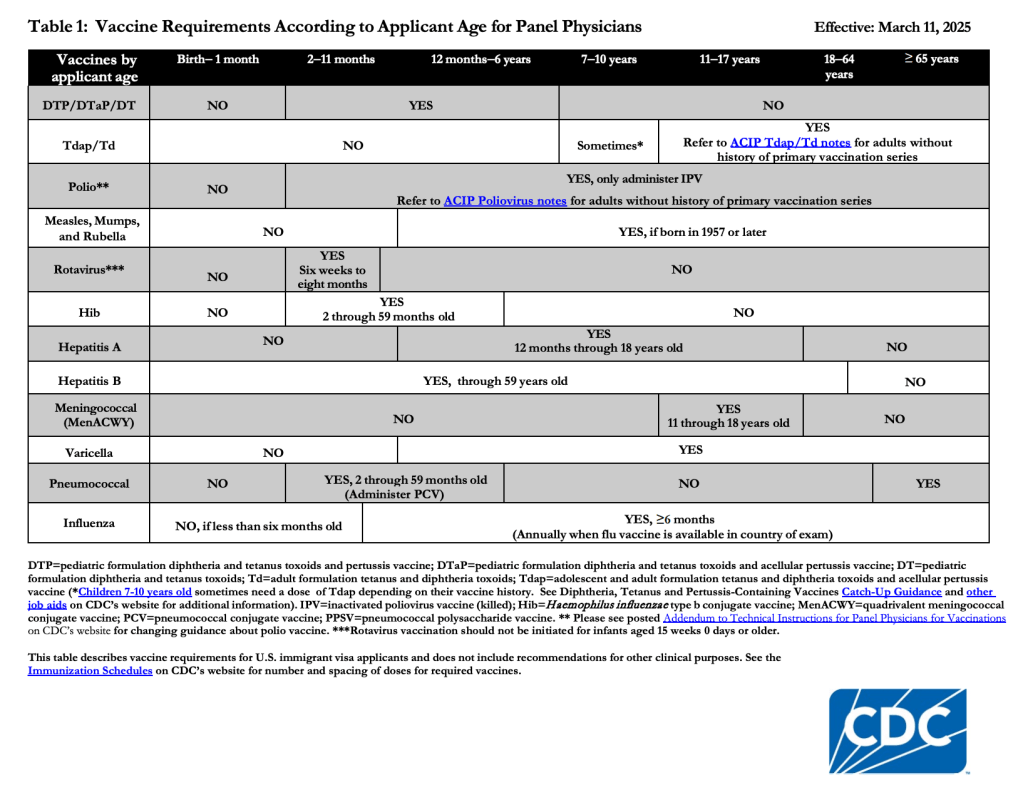
- Vaccination records – Before your visa medical you must request your vaccination records from your doctor and bring them along to your medical. You can have any outstanding mandatory vaccinations at another facility PRIOR to your medical, or we can offer any outstanding vaccinations to you on the day of your medical at an additional cost. Your medical file cannot be submitted to the US Embassy until the vaccination requirement has been completed. This means that you may have to postpone your appointment with the Embassy should the vaccination requirement not be completed in time. K-Visa applicants are not required to complete the vaccination requirement for their medical to be submitted, however they will have to complete the requirement before their “Adjustment of Status” in the US. Visit the link below for vaccine requirements per age group. Please note that these requirements refer to complete course. https://www.cdc.gov/immigrant-refugee-health/media/pdfs/Vaccine-Requirements-According-to-Applicant-Age-panel-physicians-p.pdf . You will have an opportunity to discuss vaccine requirements with the nurse at the time of your medical and we can offer most vaccines on the day. Please refer to our website for prices.
- Completed medical questionnaire which can be found at: https://uk.usembassy.gov/wp-content/uploads/sites/16/2017/05/USA-MEDICAL-QUESTIONNAIRE_IV.pdf
- A Letter/Email from the embassy/NVC to confirm your case number and visa category
- Summary of medical history from GP (NOT full medical records) and reports covering any medical conditions, disabilities, and prior serious illnesses you have been treated for or anything ongoing. Ask your GP for a Patient Summary/Care Summary.
- If you wear glasses or contact lenses please bring them along to the appointment
- If you have any significant/ongoing/previous medical conditions please ensure that you bring a report from your GP/Specialist/Consultant regarding this; including, medication, prognosis, management etc. (this includes conditions such as depression, anxiety, learning difficulties and hypertension). * If your medical notes are very extensive (more than 10 pages) please inform Visa Medicals before you come for your medical. This requires extra time with the doctor to go through your notes. If you do not inform us of this, you will be charged for an appointment slot for the doctor to read these notes. PLEASE NOTE: If the Doctor feels additional reports/information is needed to complete your medical we will not send anything to the embassy until this has been received, which may cause delays to your application. PLEASE NOTE IF YOU ARE HIV+ YOU WILL NEED TO INFORM THE CLINIC IN ADVANCE OF YOUR APPOINTMENT AS THERE WILL BE ADDITIONAL SCREENING NEEDED.
Based on that email, here’s what I did before my exam:
- Made sure I had my passport and ACRO police certificate
- Went to my GP surgery and asked for a Patient/Care Summary
- I also asked my GP for a letter about a previous health condition. (They said they’d take 28 days and it turned out not to be relevant.)
- Checked what vaccinations were missing (you can get these on the day, but I decided to get the Covid vaccine ahead of time at Boots)
- Completed and signed the medical questionnaire, and printed it off
3. Arrival & Check-in
Getting there is easy. If you’re travelling on the Tube, get off at Bond Street and walk the 8-9 minutes to the building. Here’s the address:
Ground Floor
4 Bentinck Mansions
12-16 Bentinck Street
London
W1U 2ER
The confirmation email makes a point of telling you that it’s not “4 Bentinck Street” and is across the street from The Coach Makers Arms, but if you just plug the address into Google Maps you’ll have no problem finding the right location. Here’s what the building looks like from the outside:

Once you’re buzzed in by reception, you’ll turn right and see the following door (except less fuzzily, hopefully):

When you arrive, the first thing you’ll do is check in with the (very friendly) staff at the reception at one of the two windows. If you need to use the facilities at any point, they’re just as you walk in on the left, opposite the reception.
You’ll first be given a vaccination record form to complete, which includes the following:
- Personal details (name, address, date of birth, age, sex)
- GP details/postcode
- Health questions, including:
- Vaccines received in past 4 weeks
- Allergies/severe allergic reactions to drugs
- Other health questions (if you’re pregnant, if you’ve had chicken pox, any heart/lung/neurological conditions etc.)
- Any medications you’re taking
This form is for you to complete at the window, in case you decide to have any vaccinations done with them on the day (the full price list is listed on their website).
You’ll then hand over all the documents you brought to the exam at the window. For me, this included:
- My passport (the original, not a copy)
- Police certificate (I took the original, but a copy is fine)
- Printout of my vaccination records (from my GP)
- Completed and signed medical questionnaire
- Printout of email from NVC re: my Embassy interview
- A summary of medical history from GP (Patient Summary/Care Summary)
A member of staff will take the documents to photocopy. You’ll be given them all back later. For certain ongoing/previous health conditions, a GP letter may be required.
After that, a member of staff at reception will come out and take your photo.
You’ll be asked to sign a consent form and confirm that the information on a few printed labels is accurate (basically your name and date of birth).
After all that, you’ll go through to the main waiting room, where other applicants will be waiting for their appointments.
4. The Chest X-Ray*
The staff will eventually call out your name and you’ll follow the radiographer to the first room to have your chest X-ray.
This part takes about 2 minutes, so there’s not too much to say here, except that you’ll have to take your shirt fully off if it isn’t a plain one. (My t-shirt was plain white so I didn’t have to traumatise the radiographer.)
Also, if you’re attending the exam with your kids, only one person can go into this room at a time, so the kids will have to wait outside the room (or in the waiting room) for a couple of minutes.
* Applies to applicants aged 15 and above.
5. The Doctor’s Exam
After a bit of a wait—half an hour or so, for me—the doctor called me into his office. He was very personable and friendly, which set me at ease.
He began by asking if I wanted a chaperone, which I didn’t, so he started with the medical questions, which felt like they were broadly in line with the questions on the medical questionnaire.
After that, he conducted a type of Snellen test, where you read the bottom row of that letter board, just like you have to do at the opticians (except you can wear your glasses, so it’s much easier!)
I then had my weight and height measured, and had my blood drawn (to test for syphilis, which all 18-44 year olds will need).
After that, I had to strip down to just my underwear and sit down on the medical recliner. The doctor briefly felt various parts of my body (like the lymph nodes, abdomen, etc.), and then took my blood pressure.
And with that, the doctor’s examination was all over, and I returned to the waiting room. It was all pretty uneventful, if not particularly pleasant.
6. Vaccinations
NOTE: The Covid vaccine is no longer required for visa applicants to the U.S. In January 2025, USCIS announced that adjustment of status applicants no longer had to get a Covid booster. Consular processing cases—applicants for immigrant visas outside the U.S., applying at U.S. embassies and consulates—soon followed suit.
After a bit of a wait (another 20-30 minutes), it was time to see the nurse about my vaccinations.
Remember, before the medical, you should visit your GP’s surgery to get a printout of all the vaccines you’ve had. My vaccination records showed that I’d had all the usual vaccines as a kid (or at least, whatever was usual for a kid in the late 80s/90s), including:
- Measles, mumps and rubella (& booster)
- Hepatitis A
- Hepatitis B (x3)
- Tetanus/diptheria
- Polio
- Meningitis C
Again, that was just me – yours may vary, and these days the list is more comprehensive. I also had a few Covid jabs on my vaccination record.
This part of the medical exam actually wasn’t too bad in the end: since I’d had a Covid booster a few weeks before (at Boots, for £98.95, owch), that left just a couple of remaining jabs:
- Tetanus booster (it had been more than 10 years since my last one) – £40
- Flu jab (because it was still flu season) – £20
You can check what vaccinations are required, by age, using this table, but they’ll confirm on the day:
What about chicken pox?
When I was growing up, not only did most kids get chicken pox, I’m told we even had “chicken pox parties’, to make sure we got it out of the way at an early age.
But one question I had going into my medical was: how will they know I had chicken pox? Would they just take my word for it? Or would I need to get a blood test of some kind to prove it?
In the end, it was straightforward: the form I completed at the beginning of the appointment asked: “Have you had chicken pox?” I wrote “Yes,” and that was pretty much that, other than the nurse confirming my answer during that part of the appointment. So no need for those expensive blood tests proving that you have the antibodies. (Of course, if you haven’t had chicken pox, then you may well need the varicella vaccine.)
Once all that was over, I was sent back to the waiting room for another 5-10 minutes. Then my name was called one final time.
7. Check-out (and Payment)
The worst part of the medical exam is arguably at the very end, when the staff at reception instruct you to whip out your credit card and pay £395, plus the fees for any vaccinations you might have received on the day. As I mentioned above, I was also charged another £60 for the two vaccinations I had to have.
And that was that!
US Visa Medical FAQs
1. How long does the U.S. visa medical exam in London take?
About 90 minutes. I was in at 10.50am on the dot (the time of my appointment), and was out by 12.30pm.
2. Where does the U.S. visa medical exam take place?
Here’s the address:
Ground Floor
4 Bentinck Mansions
12-16 Bentinck Street
London
W1U 2ER
The confirmation email makes a point of telling you that it’s not “4 Bentinck Street” and is across the street from The Coach Makers Arms, but if you just plug the address into Google Maps you’ll have no problem finding the right location.
3. I don’t want to travel to London! Can I do the medical exam somewhere else in the UK?
Nope.
4. Is the Covid-19 vaccine still required?
On January 22, 2025, USCIS announced that adjustment of status applicants—that is, those already in the U.S. applying for their green card—no longer had to get a Covid booster. Consular processing cases—applicants for immigrant visas outside the U.S., applying at U.S. embassies and consulates—soon followed suit.
5. How much does the U.S. visa medical exam cost?
Here’s a graphic from the US Visa Medicals website outlining costs:
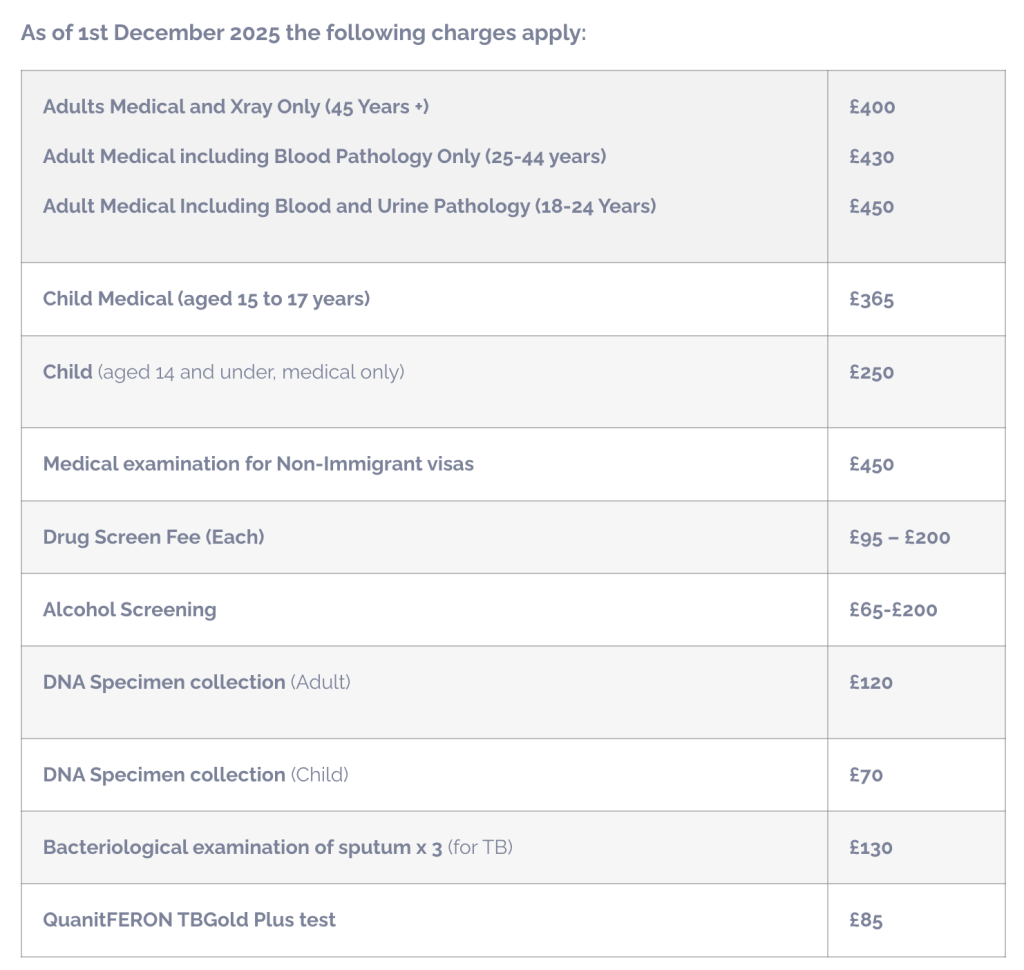
This is in addition to vaccination costs, which can be obtained on the day or at a pharmacy of your choosing.
Payment for the medical will need to be paid on the day by cash or card (but the card owner has to be present). They don’t take American Express or cheques, or payment over the phone.
If you change or cancel the appointment with less than 3 clear working days’ notice you’ll be charged a cancellation fee of £100 per person. Owch.

Join the Conversation!
Excited to start a new life in the U.S. but unsure where to begin? Become a transatlanticist today for access to expert advice, exclusive discounts, and a community of friendly people who can help you cross the pond with confidence
 transatlanticists
You must be logged in to post a comment.