
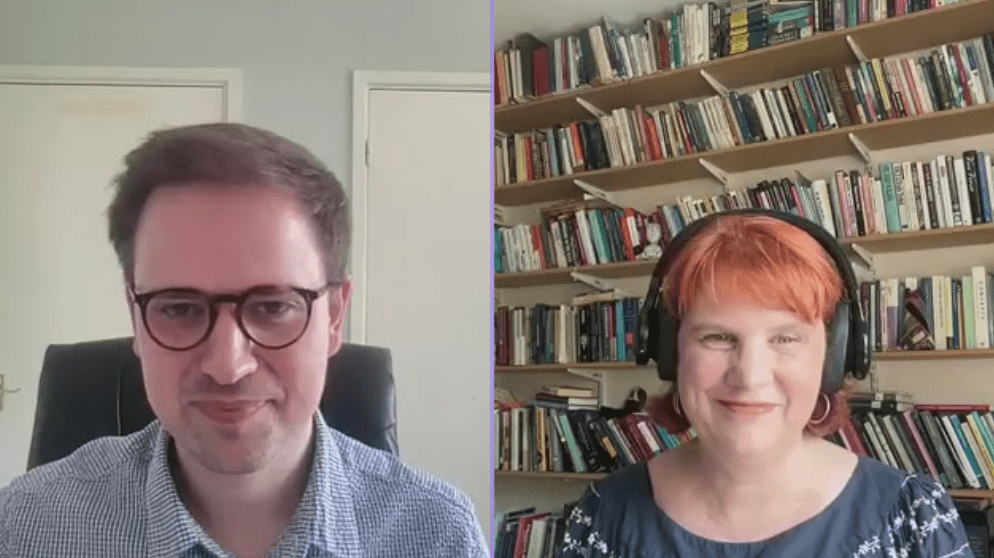
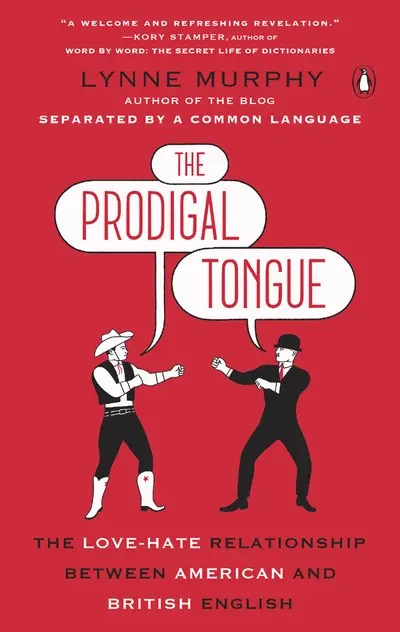
For our very first podcast episode, we spoke to Professor M. Lynne Murphy, a professor of linguistics at the University of Sussex and the author of The Prodigal Tongue: The Love–Hate Relationship between British and American English (2019). As an American living in the UK, Professor Murphy provided a fascinating insight into the similarities and differences between British English and American English, as well as providing some practical guidance for Brits moving to America. We’ve transcribed the episode for you below, but feel free to listen to the audio version on our podcast!
The Transatlanticists Interview with Professor Lynne Murphy
Oliver Ward: Hello and welcome to the Transatlanticist podcast. I’m your host, Oli Ward, and I’m the founder of Transatlanticists. We’re here to help you cross the pond with confidence and navigate life as a Brit in the US. So, if you’re planning a move to the US, already living there, or even heading back to the UK, please consider joining our community. Just go to transatlanticists.com, where you’ll find tips, exclusive offers, expert advice, and a friendly community going through the same journey too.
I’m delighted to be joined for our very first episode by Professor Lynne Murphy, Professor of Linguistics at the University of Sussex. Professor Murphy is also the author of one of my all-time favourite books, The Prodigal Tongue: The Love-Hate Relationship Between British and American English, which was named one of The Economist’s Books of the Year in 2018. She also writes a blog called Separated by a Common Language about the differences between British and American English, so she’s very well placed to help us navigate the transatlantic divide. Professor Murphy, thank you so much for being with us today.
Professor Lynne Murphy: Thanks for having me.
Oliver Ward: Let’s start you off with a nice, easy one. How different are we really, the UK and the US? Why are Englishes so different? What are the historical explanations for that?
Professor Lynne Murphy: Well, the answer I always give to that question is, “How long is a piece of string?” How different are we? We’re perfectly able to communicate 99.9% of the time absolutely fine, so in the main we’re the same. But there are differences in every aspect of communication. So, you won’t read a newspaper article without there being differences. Our accents are obviously very different. The spelling differences are less than 1% or 0.1% of our spelling. They’re obvious, but they’re pretty minor. I think what’s more different in how we communicate is just sort of our preferences for putting things one way or another. So, in the main, we can understand each other, but give me a piece of text written by someone, say a page long, and I could probably tell where they’re from just by how they phrase things.
In terms of how we got this way, English has been spoken in North America for about 500 years, so it’s had a long time to separate. And, of course, for the first 400 years, or, you know, 350 years or so, there wasn’t much quick communication between the places. So, it was very easy for things to change in the UK and not be picked up in the US, or for things to change in the US and not be picked up in the UK. In particular, in terms of things like vocabulary and manners. In the 19th century, America was coming into its own, getting lots of people from different places, not necessarily native English speakers, and society was changing fast. Things were changing fast. We had the invention of the telephone, the railway, the motor vehicle, and all of those things needed names, and they just developed separately. English doesn’t have any national or international academy telling us what the approved English is, so we just figure it out for ourselves. And obviously, people in different places not talking to each other will come up with different ways.
Oliver Ward: Obviously, there’s a certain type of English person who is quite snobbish about American English, and you must get this a lot as someone who’s lived in the UK and speaks with an American accent. It must be vaguely infuriating to hear these complaints about Americanisms and the supposed corruption of the English language—things like “Oh, this American corporate speak, isn’t it terrible?” or “If I hear someone say, ‘Can I get a coffee’ one more time…” What’s your response to that? And how do you deal with it when you hear it?
Professor Lynne Murphy: Well, mostly I write a book and put all my responses to those things in the book! But, yeah, you say it’s a certain kind of person, and definitely there are people who get more exercised about it than others, but I think everybody does it a bit. And, you know, Americans do it too towards British English. Language is a big part of who you are, and when people do it differently, you notice it. If you like the people, you like the language. If you have more mixed feelings about the people, you probably don’t like the language as much.
I think older people have a harder time with Americanisms because they remember when things were called something else. When I talk about this with students in their twenties, there are things their parents or grandparents would be upset about that they don’t even realise are Americanisms. “Can I get” is a good example—if you’re 20 in the UK, you probably say “Can I get a coffee” these days. But by the time those people are 50, they’ll have their opinions about the latest language trends. It’s all about what you’re used to.
What I say to people is, it’s not fun to be upset about it. It’s better to be happy about things. If you can find ways to enjoy the differences, and understand that a language that isn’t changing is a dead language, it’s a sign of vitality that we have different ways of saying things.
Oliver Ward: I think that’s excellent advice. You also have a blog called Separated by a Common Language, and every year you publish a US-to-UK word of the year. Can you tell us about the criteria for that prestigious award? And let’s discuss 2023’s entry, which was just the word “okay.” That’s fascinating to me.
Professor Lynne Murphy: Yeah, I started the blog in 2006, so it’s been going for a while. I decided to do this word of the year thing because I’m involved in dictionaries, and dictionaries do words of the year. My criteria are that the word has to have been established in the other dialect for a while, and then somehow make a splash in the other dialect that year. It could be for good or bad reasons—maybe something a prime minister said that got a lot of play. One year, it was “shit-gibbon” because that became an insult for Donald Trump that Americans loved.
So, “okay” made the list this year because the Daily Mail ran a story about how it makes Brits sound stupid. They said that saying “okay” makes you sound insecure, which was ridiculous. But that story got a lot of attention, and I noticed that British people are using “okay” more and more, often spelling it out with four letters, which Americans rarely do.
Oliver Ward: Yeah, that’s fantastic. I remember reading that there’s this distinction between how Brits say “right” as a response and how Americans say “okay,” with Brits sounding more learned or intelligent.
Professor Lynne Murphy: Yeah, in American English, “right” is more definite, like you’re pretty sure of something. In British English, “right” can just be a way of saying, “I’m listening” or “I’m barely understanding.” It’s subtle but different.
There’s another difference in how Brits and Americans use “yes” and “no” in conversation. If I say something like, “I didn’t like that,” an American would acknowledge with “yeah,” but a Brit might say “no” because they match the negative. It can make British people seem more negative, but it’s just a conversational quirk.
Oliver Ward: This ties into something else you write about—politeness theory. Can you explain the differences between US and UK politeness and how it affects our communication?
Professor Lynne Murphy: Yes, in politeness theory, there’s the idea of positive and negative politeness. Positive politeness focuses on making people feel included and equal, while negative politeness is about showing respect and allowing people their space. Americans tend to focus more on positive politeness in a wider range of contexts, making everyone feel equal. British culture mixes both, with more deference in certain situations.
One example is how Americans use “please.” In American English, saying “please” can feel like you’re asking for something big, so Americans use it less often than Brits do. If you say “please” too much in the US, it can either sound like you’re begging or being bossy.
On the other hand, Americans thank people more often, especially for intangible things like time or consideration. So, there’s a balance—less “please” but more “thank you.”
Oliver Ward: That’s fascinating. I’m definitely rethinking my emails now! What other advice do you have for Brits moving to the US, particularly with phrases that might be interpreted differently or negatively?
Professor Lynne Murphy: Compliments are another big one. Americans give compliments much more freely, often when first getting to know someone, as a way of building rapport. British people sometimes find it insincere, but it’s genuine—it’s just a cultural difference.
If you can learn to give a few compliments, you’ll fit right in.
Oliver Ward: That’s great advice! What about your personal experience? You moved from the US to the UK in 2000, and I understand you’re married to a Brit. How has your language or identity evolved in all that time?
Professor Lynne Murphy: Yes, I’ve been here for 24 years, and while my accent has changed a bit—some of my vowels and consonants have shifted—I’m still very much noticed as an American. I don’t mind it, though. I’ll always be an American here, even if I’ve got the passport. It’s fine as long as I’m not treated badly, and I’ve noticed that people mock my accent less over time, which is nice.
Oliver Ward: What do you miss most about living in the US?
Professor Lynne Murphy: Electrical outlets in bathrooms and window screens!
Oliver Ward: I’m with you on that, especially the air conditioning. Thank you so much, Professor Murphy, for being our inaugural guest on the Transatlanticist podcast. I highly recommend Professor Murphy’s book, The Prodigal Tongue, to anyone interested in the linguistic differences between our two countries.
Professor Lynne Murphy: It’s been a pleasure!


Join the Conversation!
Excited to start a new life in the U.S. but unsure where to begin? Become a transatlanticist today for access to expert advice, exclusive discounts, and a community of friendly people who can help you cross the pond with confidence
 transatlanticists
You must be logged in to post a comment.